Robotic loading station
- Lượt xem : 373
- Ngày : 21-07-2025 17:15:28
Robotic loading station is an automated system that uses industrial robots to perform loading, unloading, palletizing, or depalletizing operations.
The loading and unloading robot station is a breakthrough technology solution in the field of automated loading and unloading - picking and placing products. This device is becoming the optimal choice for modern production lines thanks to its flexible, precise and stable working ability, especially suitable for industrial environments that require high speed and reliability.
Mikyo Packaging Machinery Joint Stock Company is proud to introduce the automatic loading and unloading solution using Co-Robot, an advanced collaborative robot line, specializing in handling light loading tasks, components, packaging, cartons, etc. With a compact design, easy programming and integration into existing systems, Mikyo's Co-Robot helps businesses increase packaging and shipping efficiency, reduce labor costs, and limit risks in manual operations.
This solution is especially suitable for factories in the fields of F&B, electronics, food, pharmaceuticals, packaging, garments... This is a breakthrough used in smart factories, suitable for businesses in the logistics industry.
What is a robotic loading station?
The loading and unloading robot station is a high-end industrial stacking robot, designed to support the automatic, precise and stable movement and lifting of goods in modern production environments such as warehouses, factories, and logistics centers. This is a smart unloading robot application solution to replace or support humans in repetitive loading and unloading stages with light to medium loads.
Precision unloading robots have features such as sensors to identify, avoid collisions and can operate independently or in coordination with humans. Robots that handle light loading and unloading help businesses reduce labor costs, limit accident risks, optimize storage space and improve the efficiency of the entire packaging and shipping line.
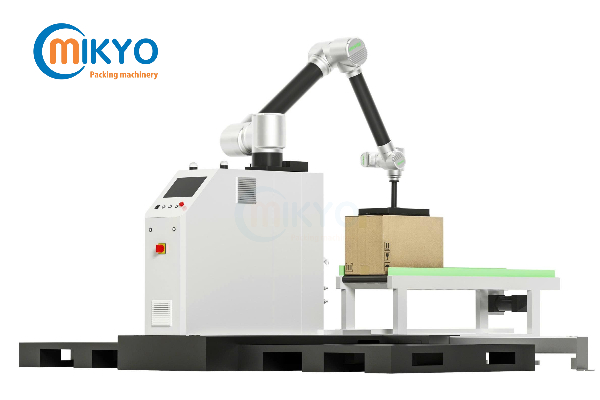
Structure of Robotic Loading Station
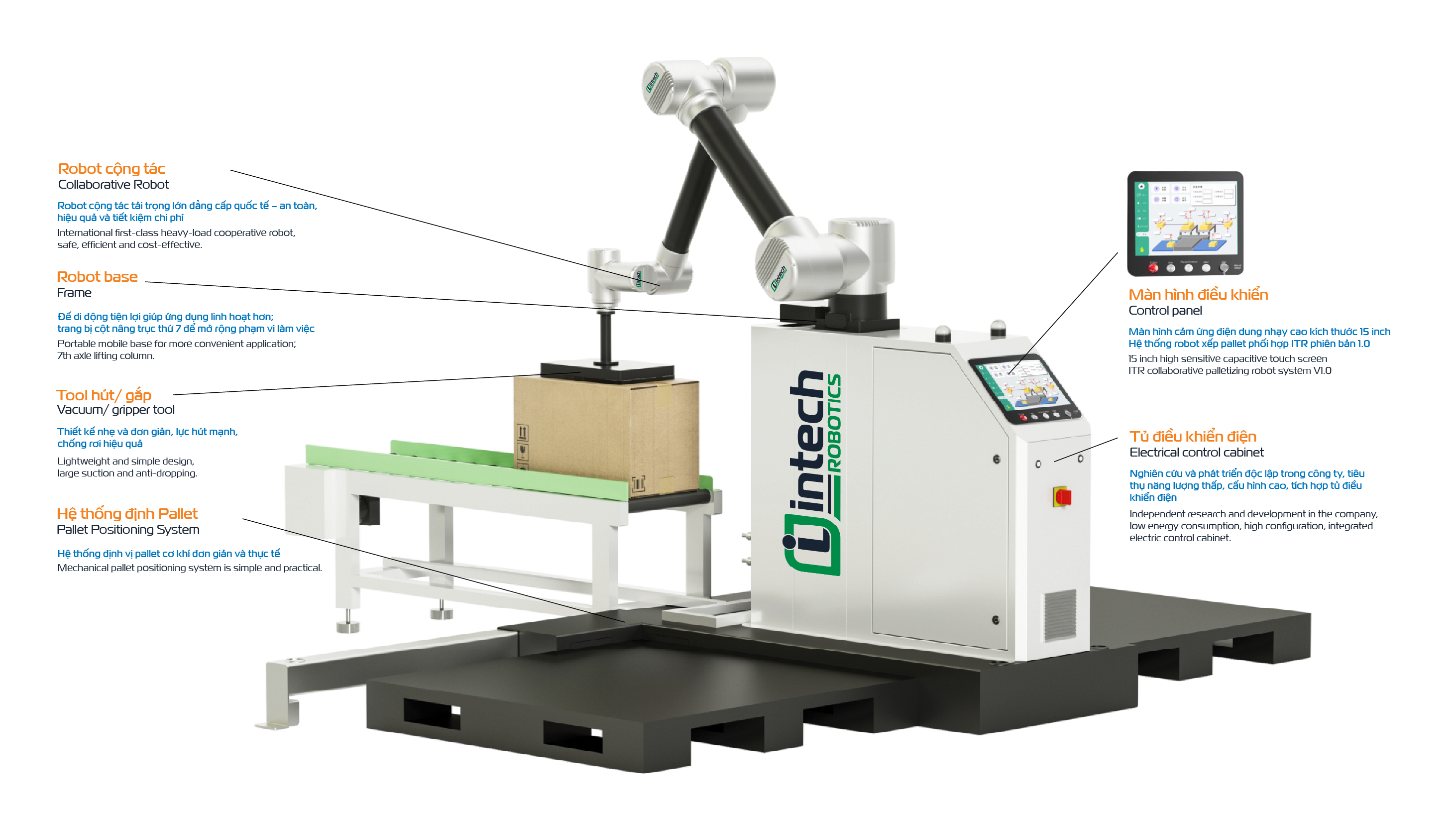
The robotic loading and unloading station is optimally designed for packaging and bagging operations in modern production environments. Its structure includes the following main components:
-
Collaborative Robot
International-class heavy-duty collaborative robot – safe, efficient and cost-effective.
-
Robot Base
Convenient mobile base for more flexible application; equipped with 7th-axis lifting column to expand working range.
-
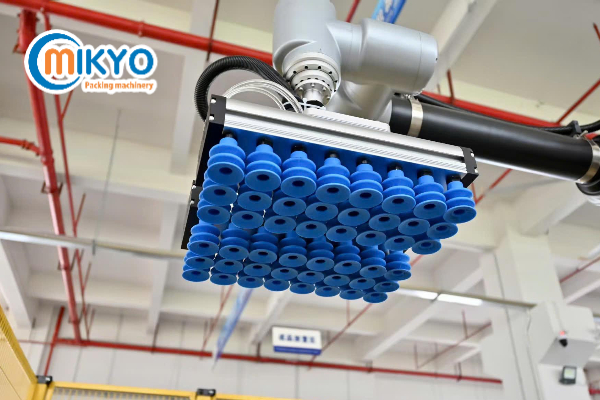
Suction/Grabbing Tools
Lightweight and simple design, strong suction, effective anti-drop – patented product.
-
Control screen
15-inch high-sensitivity capacitive touch screen ITR version 1.0 coordinated stacking robot system
-
Electrical control cabinet
Independent research and development in the company, low energy consumption, high configuration, integrated electrical control cabinet.
Outstanding features of the Robotic Loading Station
-
The machine can complete the installation and adjustment process within just 2 hours.
-
Allows to set up or change new paths in just 5 minutes
-
The easy-to-use stacking robot is capable of stacking 8-10 boxes per minute. (When the pallet reaches the set height, the robot will automatically stop to ensure safety)
-
Supports setting up to 800 stacking paths.
-
The machine is compatible with trays up to 1300mm x 1200mm in size.
-
Special feature allows stacking two different products at the same time, optimizing space and speed.
-
Supports accurate positioning and rotation of labels on products, ensuring packaging quality and product identification.
Robotic cargo handling station lines

Outstanding advantages of cargo handling robots
- Simple programming: Quick machine setup, intuitive programming software, bilingual support English and Vietnamese. Even non-professional staff can learn programming within half an hour and complete the basic program within 1 hour.
- Safe and stable: Equipped with industrial-grade force sensors, high reliability and safety. Support 10 levels of collision detection and protection sensors to ensure safe operation. When a single error occurs, the safety function still operates without interruption.
- Flexible deployment: Integrated design, light and small space, easy to move and rearrange. Set up workstations and change tasks quickly and efficiently.
- Wide application: Widely used in the food, pharmaceutical, medical equipment, 3C (computer, communications, consumer electronics), printing and cosmetics industries.
- Flexible production: Easily switch between different functional features.
- Support multiple cooperation modes: Human-machine cooperation, two-robot cooperation, multi-machine integration, support for machine-machine and machine-computer cooperation. Can be integrated with palletizing machines such as: Film wrapping machine, carton sealing machine, conveyor belt, etc.
- Floor plan: Not dependent on fixed floor plan, easy to integrate and change layout.
- Economy and practicality: Palletizing robot station brings high economic efficiency, average payback period from 1 to 2 years.
Comparison of Stacking Robot Station and Industrial Robot
| Criteria | Cargo Handling Robot Station | Industrial Robots |
| Setup & Operation Capability | Simple operation, only 15 minutes of instruction is needed for ordinary workers to use. | Requires highly skilled engineers with programming and calibration experience |
| Product handling capabilities | Can handle many types of products: bottles, jars, cartons... suitable for light industries. | Handles similar types of products but can be customized more powerfully for heavy, bulky products |
| Maximum load per grab | ≈ 40kg | Up to about 2300kg (depending on robot line, often used for large pallets, heavy components) |
| Maximum pick output | 8 – 12 products/minute | 8 – 12 products/minute |
| Peripheral integration capabilities | Limited integration, suitable for floor layout – optimal for compact lines | Easily integrated with pallet feeder systems, film wrappers, conveyors, sensors, MES systems... |
| Safety Features | Integrating safety sensors on the body of collaborative robots (cobots), can work near humans without protective fences | Requires installation of safety fences and interlock switches due to heavy loads and high operating speeds |
| Initial investment costs | Lower, suitable for businesses in the F&B, consumer, electronics, packaging industries, | High cost, requires large investment and specialized maintenance and operation expertise |
Note:
Cargo handling station: Suitable for businesses in the F&B, consumer, electronics, packaging, medical, pharmaceutical, and garment industries, where flexibility, ease of deployment, and optimal cost are required.
Industrial robots: Optimized for factories in the mechanical engineering, automotive, assembly, and welding and painting industries, where large loads, high speeds, and complex integration are required.
How to operate a cargo handling robot station
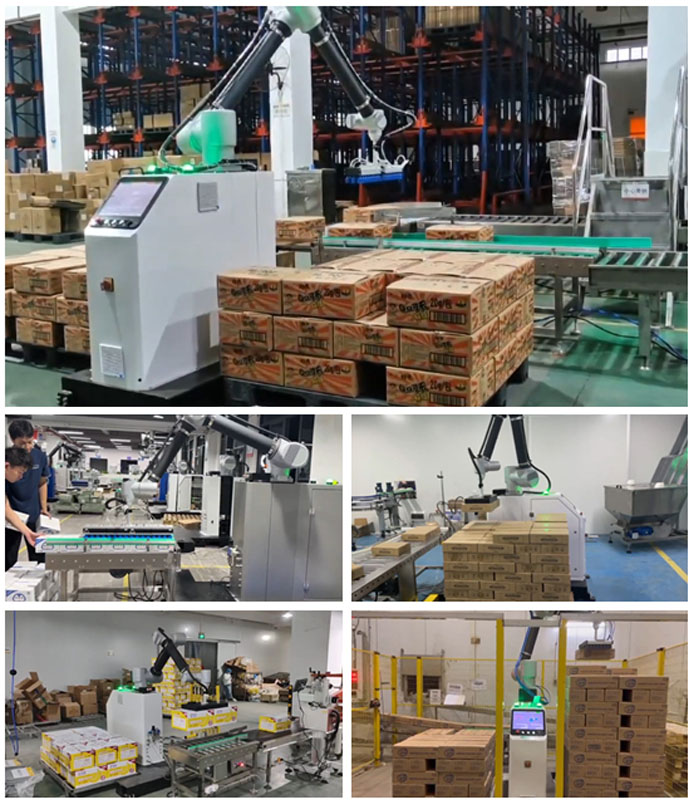
Some product images at the factory